Packing Services in Ottawa: A Practical Plan for Local and Long-Distance Moves
Packing is not one decision. It is a set of choices about time, access, materials, risk and how far your belongings will travel. Ottawa households may pack every carton themselves, ask movers to handle fragile rooms, or book a full packing crew before a local move or a relocation across Canada. This guide helps you choose a sensible scope, prepare a usable inventory, compare written estimates and keep essentials out of the shipment. It uses public consumer guidance and practical planning principles—not claims about any company’s individual jobs.

Choose the packing scope before you compare quotes
A packing quote is only comparable when each mover is pricing the same work. Before asking for numbers, divide the home into three lists: items you will pack, items you want the crew to pack, and items that need special discussion. The third list can include large artwork, antiques, musical instruments, a complex home office, unusually fragile collections, or anything the provider may not accept. Describe those pieces with photos and approximate dimensions rather than assuming they are included in a standard room count.
The most useful starting point is not “full pack or nothing.” A household can keep clothes, books and linens as a self-pack project while asking a crew to handle a kitchen, framed art or a room that cannot be cleared before moving day. Partial packing also works when some family members need to remain at home while preparation happens. Put the boundary in writing: which rooms, shelves, closets and loose items are included, who supplies cartons, and whether the crew packs on the day before loading or on move day.
Packing scope at a glance
Use this comparison to start a conversation—not as a substitute for a written quote.
| Option | You handle | Mover handles | Often suits |
|---|---|---|---|
| Self-pack | All cartons and labels | Loading and transport, if booked | Flexible schedules and smaller inventories |
| Partial pack | Routine, low-risk items | Agreed rooms or fragile categories | Households that want control with targeted help |
| Full pack | Sorting, decisions and essentials | Most agreed household packing | Tight schedules or complex homes |
How a local move differs from a cross-country shipment
A move within Ottawa still benefits from clear labels and stable boxes, but short travel time can make it easier to carry a personal tote, make a second trip or retrieve a missed item. A move between provinces is less forgiving: boxes may be handled at more than one stage, delivered within a window rather than at a precise hour, and difficult to inspect until they reach the destination. That makes a consistent inventory and a strict separation between shipment goods and personal essentials especially useful for longer routes.
For an interprovincial move, ask how the company records cartons, identifies fragile pieces, handles access at both addresses and communicates delivery timing. Confirm whether your shipment is dedicated or consolidated, what “delivery window” means in the contract, and which conditions can change the schedule. Do not infer answers from a website slogan. The Government of Canada’s moving advice recommends comparing written estimates and clarifying what the mover will include; Ontario’s guide to hiring a mover also advises consumers to specify whether packing is part of the service.
If your relocation leaves Ottawa, ask providers to explain their actual service model and route coordination in writing. For comparison, review the stated scope of long-distance moving services from Ottawa, then verify the provider, exclusions, insurance or valuation terms, packing scope and dates directly before booking. A service page is a starting point for questions, not independent proof of performance.
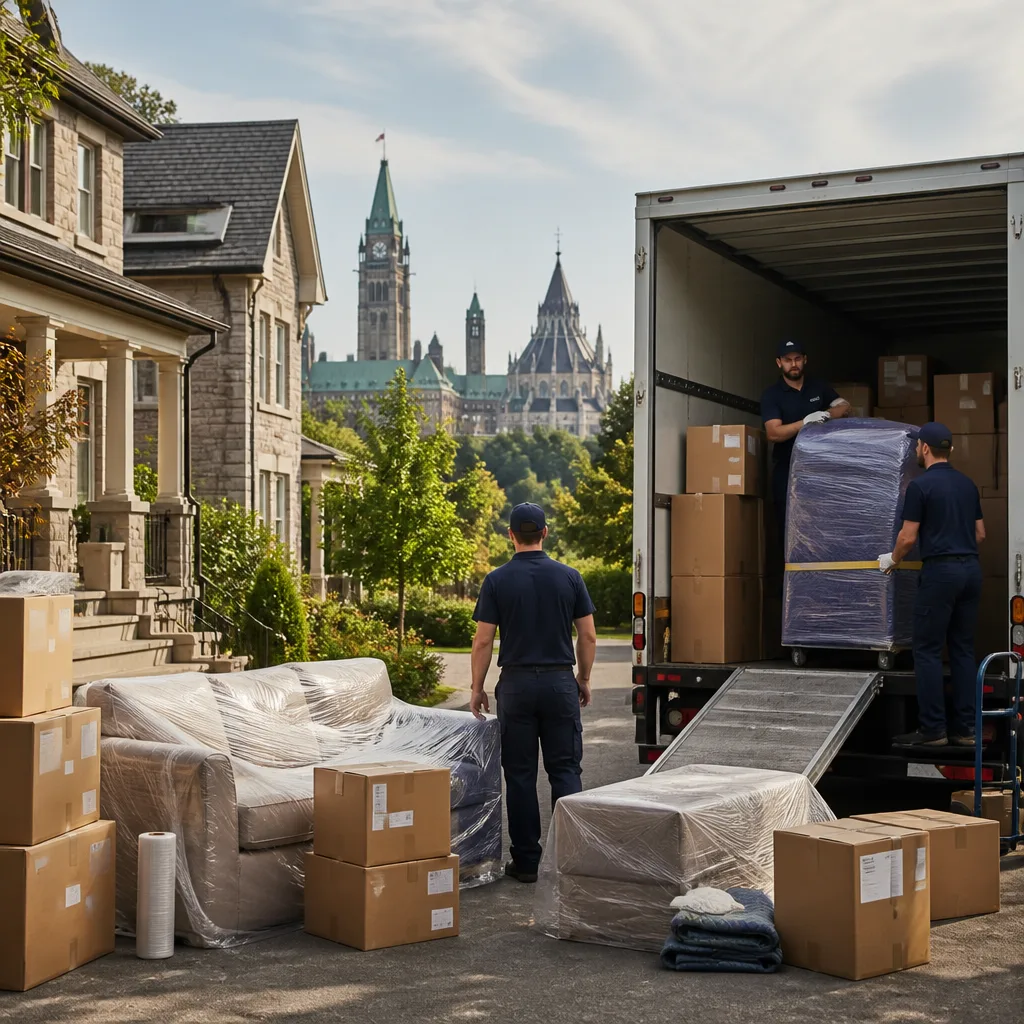
Build a room-by-room packing plan that is easy to follow
Start with a simple calendar and work backward from the confirmed loading date. Reserve time for decluttering and donation drop-offs before buying materials; otherwise unwanted items get packed, moved and unpacked at extra effort. Pack infrequently used storage, seasonal clothing and display items first. Leave daily-use kitchenware, medication, chargers, work equipment and the children’s bedtime routine until closer to departure. If a crew is packing, confirm which spaces must be cleared and whether drawers, shelves or closets are included rather than assuming every object will be boxed.
- Label each box with destination room, a short contents description and a priority such as open first or store.
- Use a numbered list or spreadsheet to connect important cartons to a room and contents category.
- Keep hardware from dismantled furniture in a closed, labelled bag attached to the relevant item.
- Photograph cable connections and furniture arrangements before disassembly.
- Mark fragile cartons clearly, but still tell the crew which pieces need special handling.
Use a label system that works in dim hallways and remains readable if a box is stacked. A room name alone is not enough when the destination has a different layout: add a broad contents note such as “pantry—dry goods” or “office—monitor cables.” Keep private information off carton labels; a street address, full name and detailed valuables list should not be visible from the sidewalk. If the new home is not ready or rooms are still being assigned, use temporary room names such as “upstairs bedroom A” and share the map with whoever unloads.
Use the right materials for fragile and awkward items
Good packing starts by preventing movement inside the carton. Choose a box that is strong enough for its contents, wrap items individually where surfaces can rub, and fill empty space so the load does not shift when lifted. Put heavier pieces low and lighter pieces above them. A carton that bows, has a soft base or needs to be carried by its top flaps is not ready for loading. Ask the mover which materials they supply and whether those supplies are included in the estimate or billed separately.
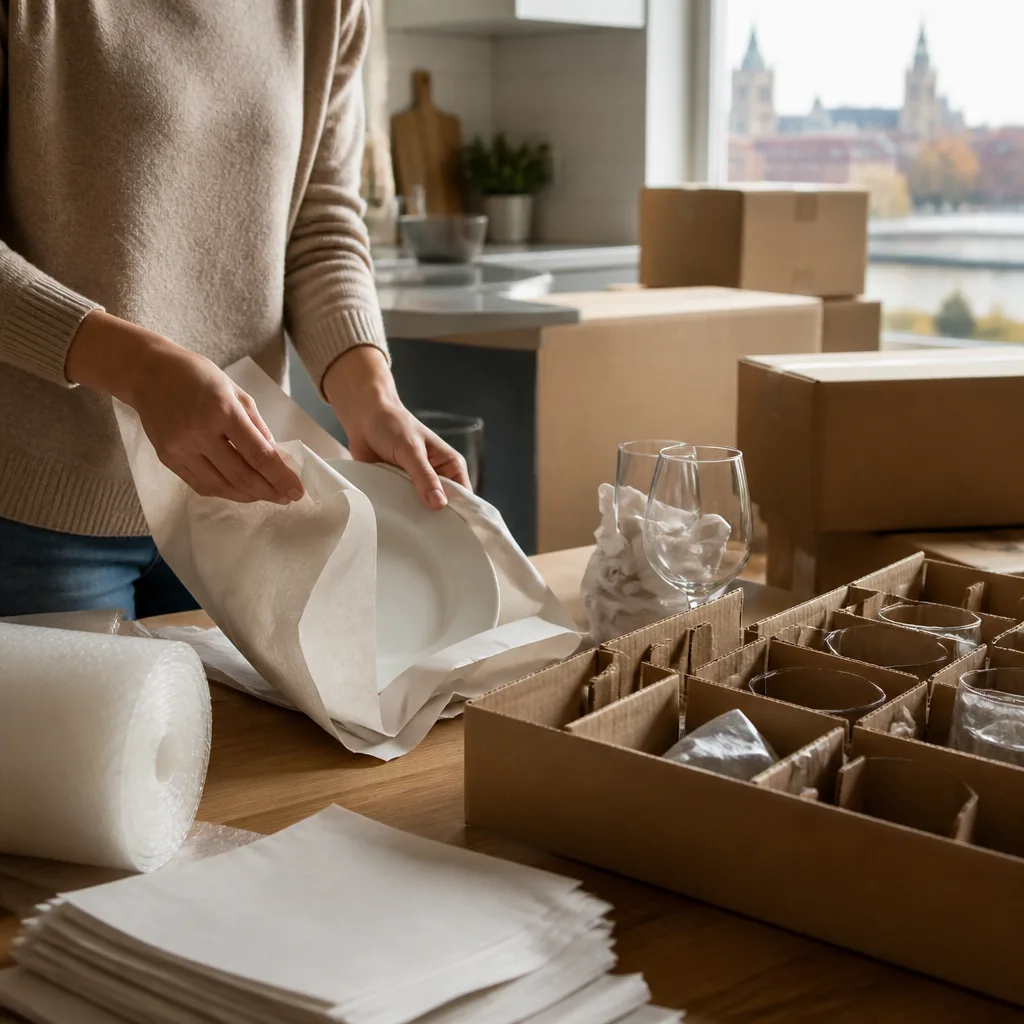
For dishes and glassware, separate pieces with clean cushioning and avoid leaving stems or handles exposed to impact. Mirrors, framed art, lamps, televisions and musical instruments may need a purpose-built carton or a different method than ordinary boxes. The right answer depends on shape, value, existing packaging and the mover’s terms; if in doubt, photograph the object and ask before packing it yourself. The dedicated guide to packing fragile items for a long-distance move covers item-level techniques, while your mover should explain any packing standards tied to its coverage.
Make the inventory and written estimate specific
A useful estimate reflects the inventory and access conditions—not just the number of bedrooms. Give the same information to every company: rooms, storage areas, bulky items, approximate carton counts if self-packing, stairs or elevators, long carries, parking limits, pickup and delivery addresses, and any date constraints. Mention items that cannot be boxed or that require disassembly. If the inventory changes materially, tell the mover before the contract is finalized and ask for an updated written quote.
Separate the price of labour from materials, special handling, travel, storage and any optional unpacking. Ask whether the estimate is binding, not-to-exceed or an estimate subject to adjustment, and what specific events could change it. Read the contract before paying a deposit. Ontario’s consumer guidance for hiring a mover explains what information a written moving contract must contain and what to do if you have a problem. For moves beyond Ontario, check the relevant provincial consumer rules and the contract terms rather than assuming one province’s rules apply everywhere.
- What exactly is included in the packing scope and what is excluded?
- Who supplies cartons, wrap and specialty materials, and how are unused materials handled?
- How are packed cartons listed, labelled and checked at delivery?
- What protection or valuation options are offered, and how are claims documented?
- Which pickup, delivery and access assumptions are written into the estimate?
Separate the shipment from the items you need immediately
Create a “do not load” area before the crew arrives. Use a closed room, a clearly marked vehicle or another agreed location; a loose sticky note can disappear during a busy handoff. Pack a first-night bag for each person, basic cleaning supplies, a small tool kit, device chargers, pet supplies and a few days of weather-appropriate clothing. For a longer route, add work documents and items needed before the delivery window closes. If your destination is not yet accessible, identify where these essentials will be stored safely during travel.
Before the truck leaves, walk through cupboards, closets, storage rooms and outdoor areas with the crew lead. Compare your inventory to what was loaded, note any exceptions, and keep a copy of the paperwork. At delivery, check visible condition and carton counts before signing any receipt; document concerns promptly using the process in your contract. This is not a substitute for understanding coverage, but it gives you a clearer record if you need to ask questions later.
When paying for packing help can make sense
Professional packing is most valuable when the alternative is a rushed or inconsistent job. It may be worth comparing when a move date is fixed, a household has limited time to prepare, a room contains many delicate objects, access to the home is restricted, or the move spans a long distance. It can also reduce the amount of packing work left for the final days, although it does not remove the need to sort, make decisions or identify what should not go on the truck.
Self-packing can be a sensible choice when you have a flexible schedule, know how to pack the items involved, and can follow the mover’s carton and coverage requirements. Partial packing often balances cost and time: keep straightforward items under your control and contract out the tasks most likely to delay the move. Compare scope, materials, written terms and schedule rather than assuming that one service level is right for every Ottawa household. For building-specific access questions, use the companion Ottawa apartment and condo moving plan.
Frequently asked questions
Should I pack myself or hire a packing service in Ottawa?
Can movers pack only fragile items?
What should I not put in a moving truck?
Is professional packing more important for a long-distance move?
How do I compare packing estimates?
Authoritative resources
Planning a move from Ottawa?
Share your inventory, dates and packing needs to start a moving conversation.
Request a Quote